Efflorescence & Mineral Stain Removal

Those white, chalky stains have a name.

Efflorescence and mineral stain removal in Las Vegas: block walls, stucco, concrete and pavers.

It’s called efflorescence: mineral salts that moisture pulls to the surface of block and stucco, where our desert water leaves its autograph. Scrubbing smears it, acid scars it, and it keeps coming back until it’s treated like the chemistry problem it is. That’s our department.

  • ★★★★★ 5.0 on Google
  • The mineral-stain specialists
  • Since 2002
  • Licensed & insured
Pair to create

Blooming block wall pair, hero grade

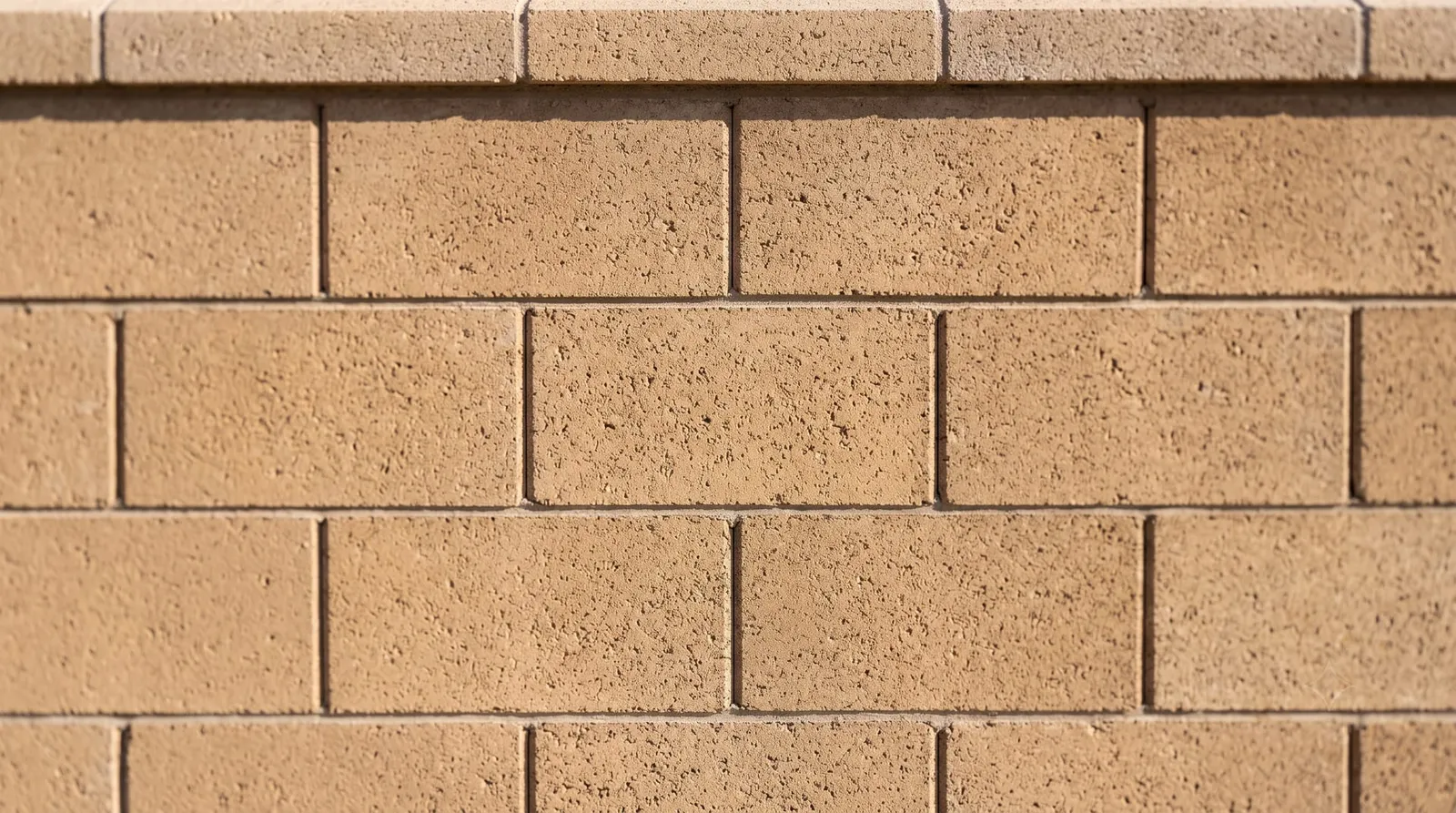
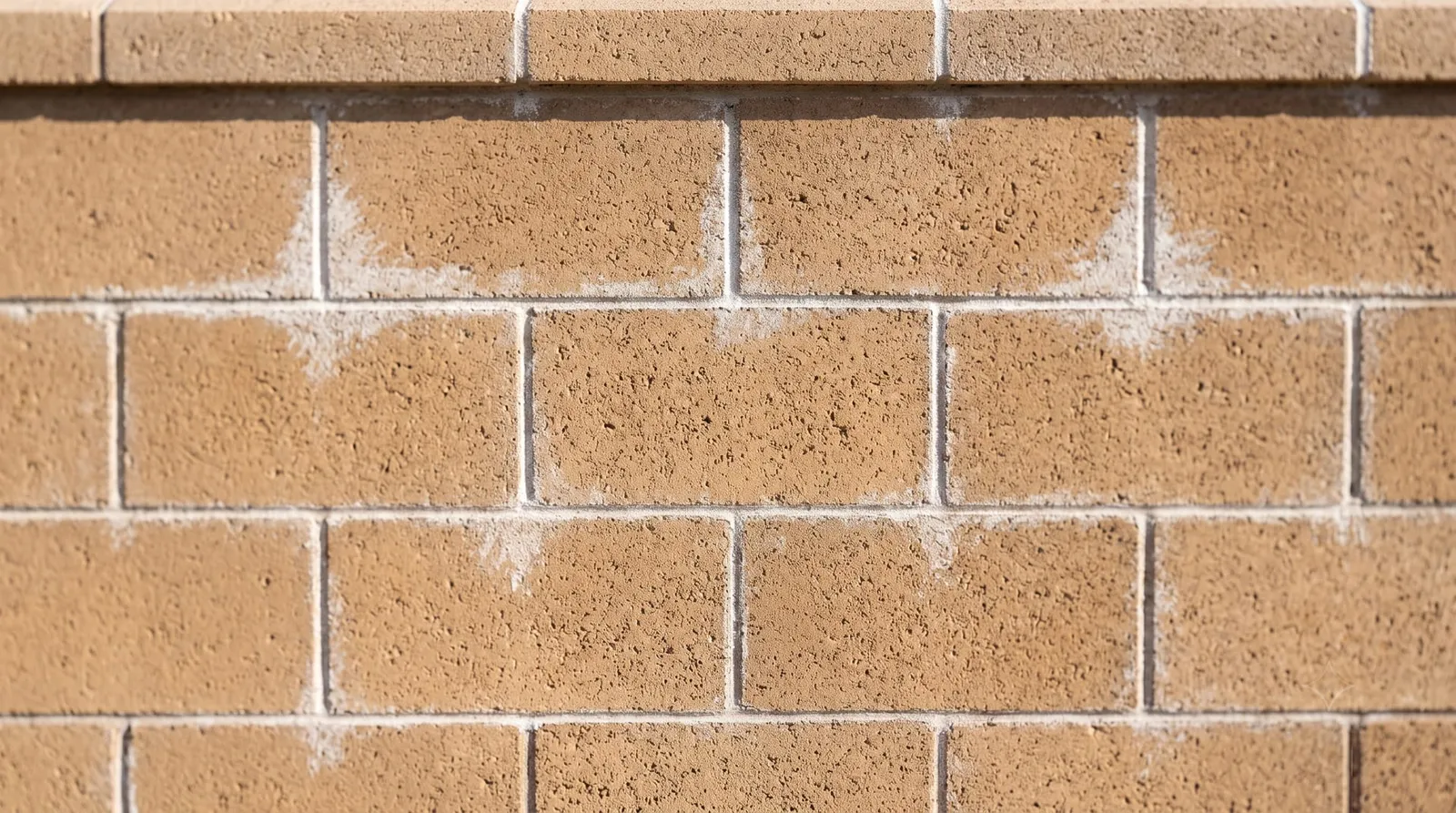
Before: tan block wall with white efflorescence blooming across the lower courses, heaviest at the sprinkler line. After: the same wall uniform and clean, mortar lines crisp. Straight-on, morning light.

Slider lands hereShot spec above

★★★★★5.0 on Googlea perfect score, kept on purpose
Power washing since 2002two decades of hard Vegas water
Licensed & insuredyour property is protected
10% off for veteransthank you for your service

Name Your Stain

Three minerals, three tells, three different fixes.

Mineral stains all look vaguely white-ish or orange-ish until you know the tells. Match yours below: the treatment is different for each, which is exactly why the one-bottle DIY approach keeps losing.

The white bloom

Efflorescence

A powdery white bloom on block walls, stucco and pavers, heaviest near sprinklers and shade lines. It’s dissolved mineral salt that moisture carries to the surface, where the water evaporates and leaves the salt behind.

Scrubbing spreads it. Plain washing feeds it more water. Hardware-store acid can burn the block and leave a scar worse than the bloom.

Our play: the right dissolving chemistry for salt, applied dry-first where the surface calls for it, then a controlled wash that carries the minerals off instead of into the wall.

The crust

Calcium & hard-water buildup

A hard white crust where water hits and evaporates on repeat: sprinkler arcs on the wall, fountain edges, deck-side stone around the pool, the hose bib drip line. Vegas water is liquid limestone, and it stacks.

This one laughs at scrubbing, and pressure alone just polishes it.

Our play: mineral-dissolving treatment matched to the surface under the crust, dwell time, then a wash that leaves the stone or block, not the buildup.

The orange trail

Rust stains

Orange-brown trails under metal furniture, planters, irrigation heads and anywhere rebar or hardware weeps. On concrete and pavers it soaks in fast and won’t rinse out.

Generic acid from the hardware store eats the surface around the stain and leaves a bleached halo you’ll see forever.

Our play: a rust-specific treatment, tested on a small spot first, then washed clean and even so the fix disappears along with the stain.

Pair to create

Wall close-up pair

Before: tight crop of block courses with salt bloom tracing the mortar joints. After: the same courses clean, texture intact, no acid burn. Close enough to see the block face survived.

The Honest Science

We remove the stain. Then we tell you why it happened.

What causes efflorescence? Water gets into masonry, dissolves the natural salts inside, and carries them to the surface. The water evaporates; the salt stays. That’s why it blooms near sprinklers, at wall bases and after rare rains, and why scrubbing alone never wins: the supply line is still open.

So here’s our honest promise, and the one that matters: we’ll remove what’s on the wall completely, and we’ll show you where the moisture is coming from: the sprinkler arc hitting the block, the grade draining against the wall, the unsealed cap course. Fix the source and the wall stays clean. Ignore it and any company’s wash is a subscription. We’d rather you know that up front.

How It Runs

Chemistry first. Pressure last.

Mineral stains are dissolved, not blasted. The wash is the last step, not the strategy. Here’s the run.

Is efflorescence a sign my wall is failing? No, breathe easy: it’s cosmetic, not structural. But it IS a flag that moisture is moving through the masonry, which is worth knowing. We point out the source while we’re there so you can decide what, if anything, to do about it.

01

Identify the mineral

Salt bloom, calcium crust and rust each answer to different chemistry. We confirm which one yours is (sometimes it’s two) before anything gets applied.

02

Test a small spot

The treatment proves itself on an edge first: stain releases, surface unharmed. No hardware-store acid guessing on a wall you have to look at forever.

03

Treat, dwell, wash

The matched chemistry gets its dwell time, then a controlled wash carries the dissolved minerals off the surface, off the wall and out of the picture.

04

Point at the source

Before we leave you’ll know where the moisture or metal is coming from, and whether sealing makes sense for your surface. The goal is a wall that stays fixed.

Questions

The whiteboard session, answered straight.

This is the most misdiagnosed stain family in the valley, so the answers here earn their keep.

What are the white, chalky stains on my block wall?

+

That’s efflorescence: mineral salts that moisture pulls to the surface of block, stucco, concrete and pavers. Our hard Las Vegas water makes it worse, and sprinkler overspray is the most common feeder. It’s cosmetic, it’s removable, and it’s one of our newest dedicated services because around here the water leaves its mark on everything.

Will it come back after you remove it?

+

Honest answer: it can, if the moisture that fed it keeps flowing. That’s why our visit ends with pointing at the source: the sprinkler arc, the drainage line, the unsealed cap. Fix the feed and the wall stays clean; leave it and the bloom returns on its own schedule. We’ll tell you which situation yours is before we leave.

Can I just use vinegar or acid from the hardware store?

+

We’d rather you didn’t. Weak vinegar mostly smears the bloom and feeds it more moisture; strong acid can burn block and etch stucco, trading a removable stain for permanent damage. Mineral removal is a match-the-chemistry job, tested small before it’s applied wide, and that’s exactly what you’re hiring.

Is my wall damaged or failing?

+

Almost certainly not: efflorescence is cosmetic, not structural. It IS a sign that moisture is moving through the masonry, which is worth understanding, and we’ll show you the path while we’re there. If we ever see something that looks like a real structural issue, we’ll say so and point you at the right trade, not sell you a wash for it.

What surfaces does this work on?

+

Block walls, stucco, concrete, pavers, stone and pool-deck surrounds. Same family of treatments, matched to each surface and tested on a spot first. The calcium line inside the pool on the waterline tile is the one thing that belongs to your pool company, and we’ll tell you that straight.

What does it cost?

+

Priced by the size of the affected area and the mineral involved, quoted free, usually from a photo. Whole-wall HOA and community jobs get walked in person. The number we quote is the number you pay, and veterans take 10% off any service.
Where Minerals Live

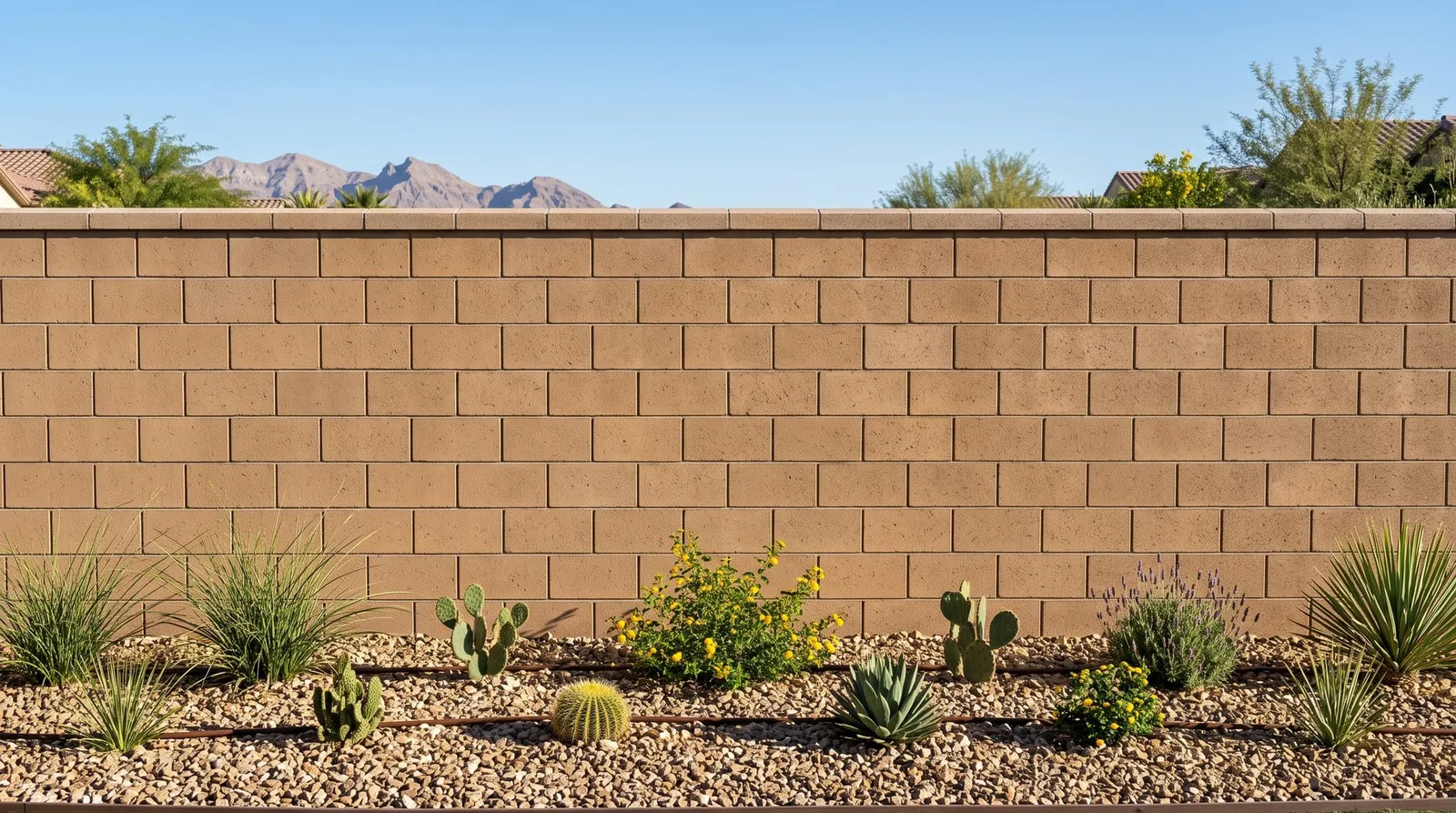
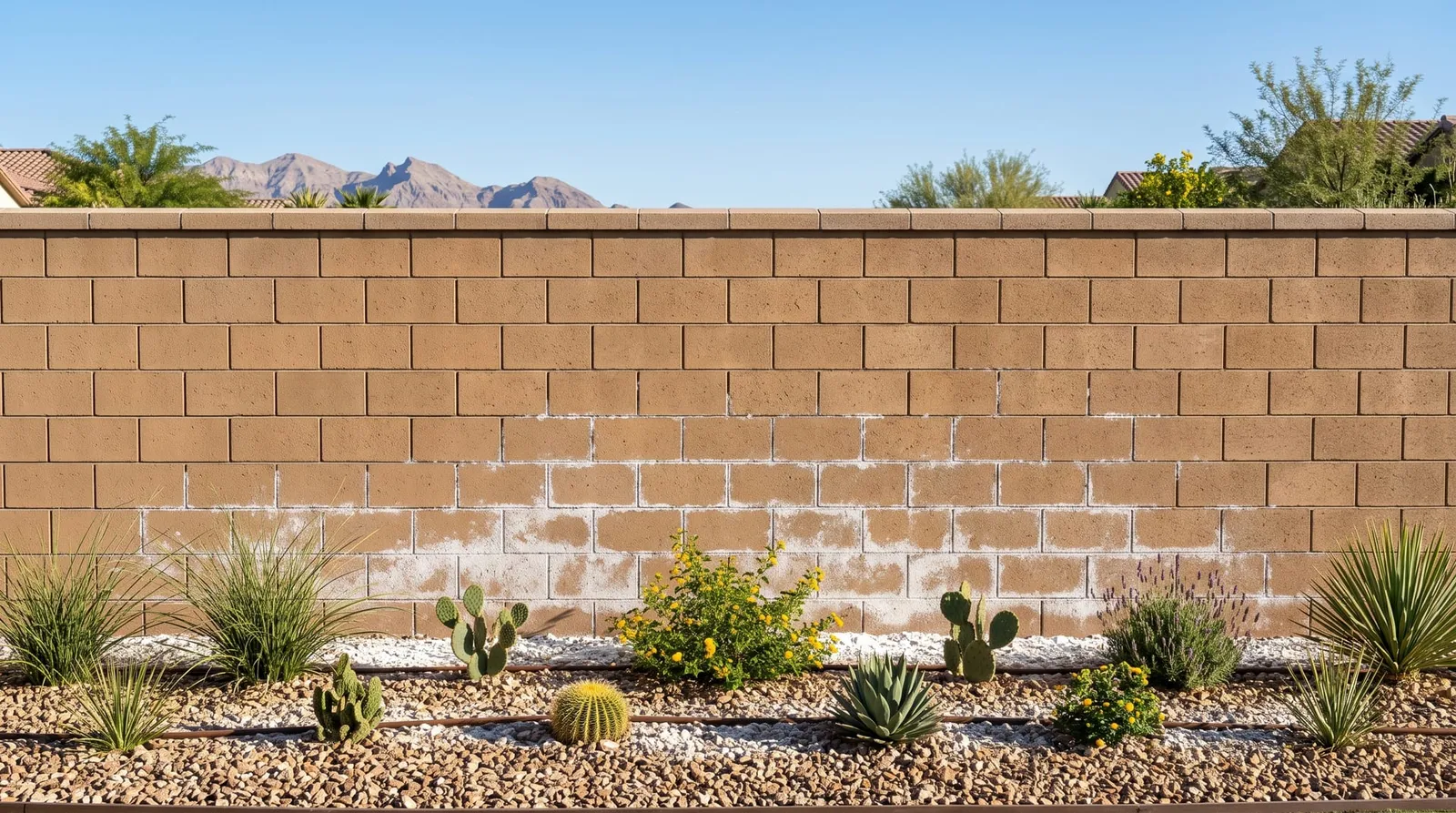
Perimeter walls and pool decks are our regulars.

HOA walls bloom at scale and pool surrounds crust by season. Both run beautifully on scheduled rotations.

Free Quote

Send the stain. We’ll name it and price it.

One photo usually tells us which mineral you’re fighting and what it takes to win. You’ll get the diagnosis and the exact number together.

  • Every quote is free, with zero obligation
  • Test-spot first: the treatment proves itself before it spreads
  • You leave knowing the moisture source, not just missing the stain

Rather talk to a person? Call (702) 518-0503

Request your free quote

Tell us what you’re looking at. We’ll take it from there.

No spam, no pressure. Just your number.

Design preview: this form goes live with the site. For now, call (702) 518-0503 and Tony’s team will take care of you.